


See, I was gonna write a post about Shrinking, but my wife, Pamalyn, nailed it better than I ever could. Soooooooo … she’s our GUEST POST!!
Do the best you can until you know better. Then when you know better, do better – Maya Angelou

Behind the Times
Bethany and I are late to the party… again. I know, I know. Some of you are probably saying, “when isn’t this true?”
By the time we discover a show, most everyone else already has opinions, picked favorite characters, and probably moved on to something else entirely. Meanwhile, we’re on the couch like, “Wait… has everyone seen this?”
Which is exactly how we found ourselves, nearly three seasons deep into Shrinking, looking at each other somewhere around episode eight of season one and saying, almost in unison, “Oh… this is special.”
Oh, Yeah. Season Three
And now here we are, getting ready to finish up season three, already a little bereft, and ridiculously excited that a fourth season has been confirmed. Because once you settle into this world -- messy, funny, achingly human -- you don’t really want to leave.
What I love most about Shrinking isn’t really the plot (though it’s fine). It’s not even the phenomenal cast of Jason Segel, Harrison Ford, and Jessica Williams. It’s the way the show insists -- gently, continuously, sometimes even comically -- that people are worth understanding.
Even when they make it difficult.
Especially when they make it difficult.
The Premise …
… if you haven’t seen it, is deceptively simple: Jimmy (Segel) is a therapist unraveling after the death of his wife, who decides to start telling his patients exactly what he thinks, boundaries be damned. It’s reckless. It’s unorthodox. It is, in many cases, wildly inappropriate.
It is also, occasionally, exactly what someone needs.
But the show isn’t even really about therapy, not really. It’s about grief and friendship and the strange, circuitous ways people try to find their footing again when life seems to be trying to kick them down.
And here’s where Shrinking does something different from most shows:
It doesn’t give us a villain.
Oh, don’t get me wrong -- there are characters who make terrible decisions. People who hurt each other. People who, in the first few episodes, you might actively dislike. The kind of characters you think, “Ugh, I would cross the street to avoid this person.”
And Then … the Show Lingers
It gives them a moment. A backstory. A crack in the armor.
And suddenly, you’re not crossing the street anymore. You’re standing there thinking, “Oh… that’s why.”
It’s not that the show excuses bad behavior. It doesn’t. Actions still have consequences. Apologies are still needed. Growth is still required.
But it does something we’re not particularly good at right now as a culture: it makes space for context.
For humanity.
For the idea that people are not just the worst thing they’ve done.
Try A Little Tenderness
There’s a kind of tenderness baked into the DNA of this show that caught me off guard. It’s in the way characters show up for each other -- imperfectly, sometimes clumsily, but consistently. It’s in the small gestures. The awkward conversations. The willingness to try again after messing everything up the first (or fifth) time. If you’ve watched the show you also know it’s in the rocks.
It’s also very, very funny.
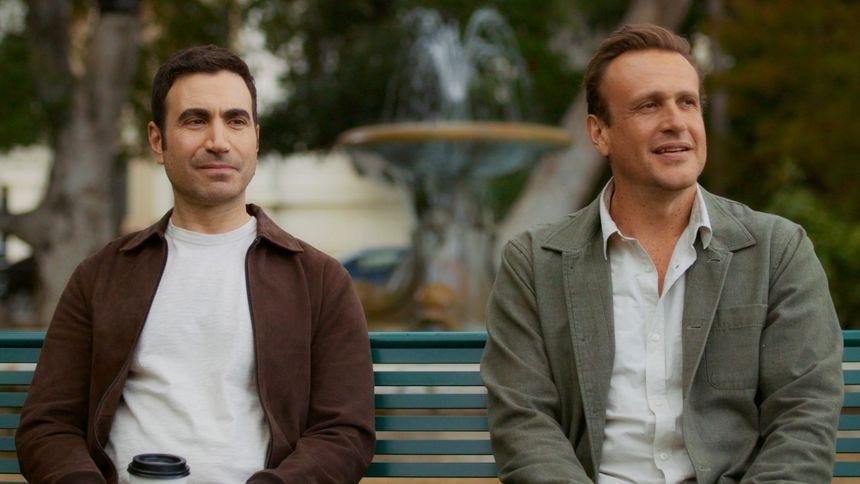
Not in an inserted laugh track, sitcom way, but in a really real way where humor shows up right alongside grief. We’ve all lived through hard things and we know that laughter sometimes shows up (sometimes at the most inopportune times) through all of it… and sometimes it makes it all just a little more bearable.
From Fears to Tears
Bethany and I have gone from laughing out loud to reaching for a tissue to wipe away the tears within minutes. It’s a balance that occurs in life, but is often missing from television: conflict, humor, tenderness, sitting together side by side.
Shrinking delivers that balance beautifully over and over again.
There’s a moment—no spoilers, I promise—where a character who has been, up until that point, deeply frustrating suddenly reveals something vulnerable. Not in a grand, speechifying way. Just a small, honest moment.
And It Changes Everything
Not because it erases what came before, but because it adds dimension.
That’s what this show understands so well:
People are layered. Contradictory. Capable of being both kind and careless, generous and selfish, brave and absolutely terrified.
People like us.
In a time when it feels like we’re all being sorted into neat little boxes—good or bad, right or wrong, worthy or not—Shrinking pushes back against that instinct. It says, “What if we looked a little closer? What if we tried to understand before we dismissed?”
And honestly, that feels … revolutionary.
Or maybe just necessary.
I think that’s why it’s landing so deeply for us right now. The world feels loud. Quick to judge. Eager to flatten people into headlines and hot takes.
And here comes this show, moving at a different pace, inviting us to sit with discomfort, to laugh at ourselves, and to recognize our own messiness.
It doesn’t ask us to approve of everything these characters do.
It asks us to care anyway.
That’s a Big Ask
And a beautiful one.
We’re a couple episodes shy of finishing season 3, and I’ve realized something: I’m not just invested in the storylines. I am invested in the people. All of them. Even the ones who drove me a little nuts in the beginning.
Maybe especially those ones.
Because that’s the magic trick, isn’t it?
Turning “I don’t like you” into “I see you.”
Turning Frustration into Empathy
Turning a room full of flawed, fumbling humans into something that feels like community.
So yes, Bethany and I are late to the party.
But honestly? I think we arrived exactly when we needed to.
Because right now, a show that believes in the possibility of growth, the necessity of compassion, and the quiet power of just showing up for each other feels less like entertainment and more like a reminder.
A gentle one. People are complicated. Healing is messy. And kindness—real, inconvenient, sometimes hard-earned kindness—still matters.
Even now.
Especially now.
~ Pamalyn Rose-Beeler
Bethany Beeler writes novels of transformation, love, and self-discovery. Her wife, Pamalyn, ain’t too shabby either! To read their stories portraying what they say here, go to their Amazon Author Page.